Showing posts with label Mains. Meat. Show all posts

Tuesday, January 26, 2021

This Meatloaf

Meatloaf... One of the classics in the pantheon of All American dishes, right up there with fried chicken, pot roast and mac 'n cheese. We've all grown up on our mother's meatloaf that was surely a clone of grandma's. Such a simple dish to make really with just a handful of ingredients but easy to screw up.

But we like to tinker and changed things up in a couple ways. Baked the loaf in a clay pot. 

Also you MUST serve this with a side of mashed potatoes. Veg of your choice.

Ingredients -

1 lb ground beef
1 lb ground pork 
1/2 lb ground veal
1 medium onion - diced
1  sweet red or yellow bell pepper - diced
3 cloves garlic minced
1 cup bread crumbs
1 egg
1 Tablespoon prepared horseradish sauce
1 Tablespoon coarse grainy mustard
1 teaspoon Worcestershire sauce
1 1/2 teaspoons Herbes de Provence
Salt and pepper

For the Glaze -

1/2 cup Ketchup
1 Tablespoon light brown sugar
2 Tablespoons Balsamic vinegar


350 degrees for 1 - 1 1/4 hours


Tuesday, May 14, 2019

Cast Iron Steaks

Just a quick food porn post. Here's a video of two bone in strip steaks I cooked in a cast iron skillet on the side burner of our gas grill. Make sure you have the sound on. Nothing else needs said...


Wednesday, May 8, 2019

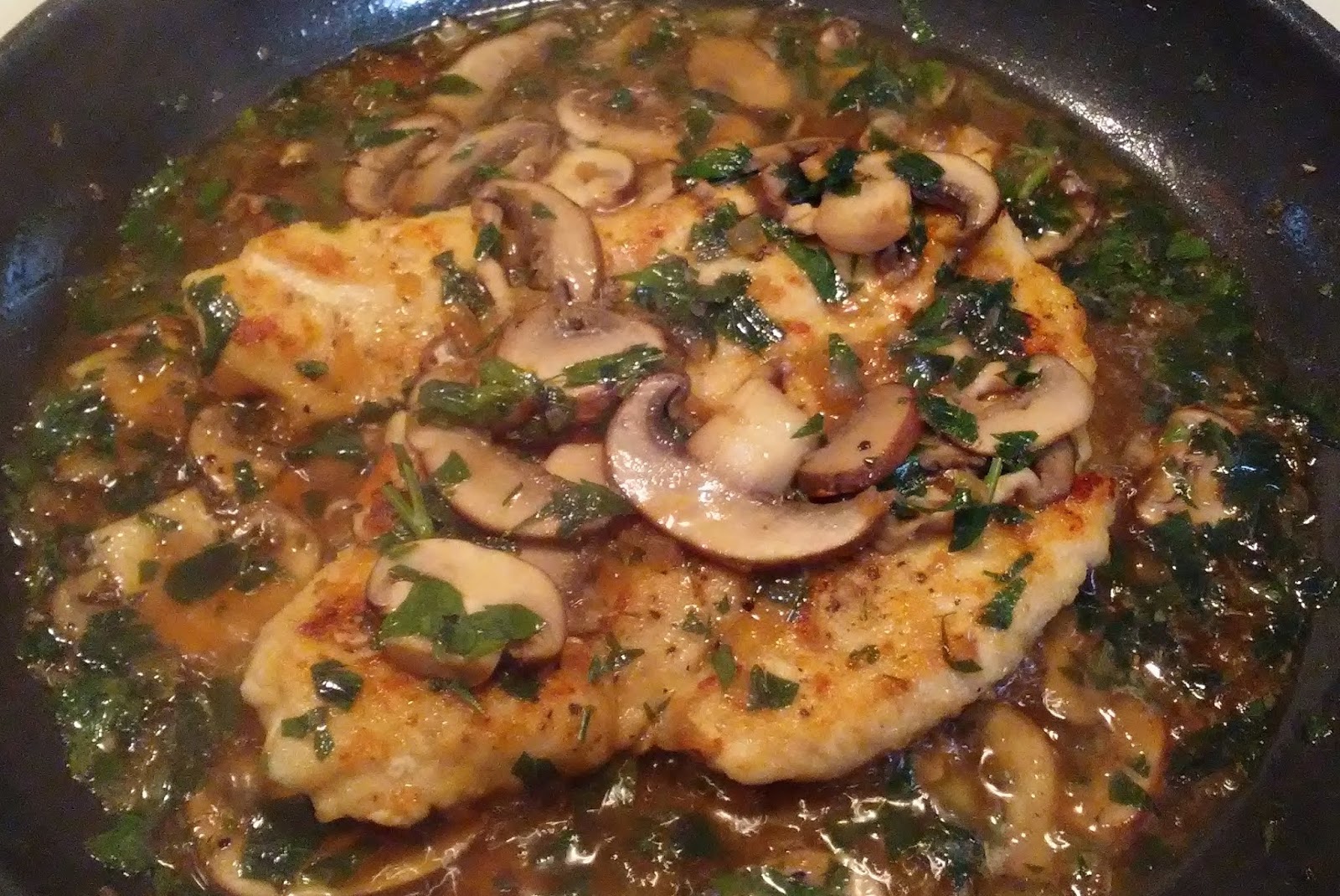
Chicken Marsala


Chicken Marsala (and it's "cousin", Veal Marsala), is a staple in every Italian-American restaurant. Sophisticated as it seems and delicious as it is, it is a simple dish to prepare, made with just a few ingredients - chicken cutlets, sliced mushrooms, minced shallots, thyme and parsley and it's namesake - Marsala wine. At its heart, though, it's just a basic chicken-with-pan-sauce dish.The key, though, is paying attention to what you are doing because things come together quickly.

First a little interesting background. The British deserve at least partial credit for the creation of chicken Marsala, even if that might make more than a few Italians cringe. The dish, which has its roots in Sicily, cannot be made without Marsala wine, which is a wine produced specifically around the city of Marsala in Sicily. And that's where the British influence comes in - they were instrumental in spreading fortified wines like Port and Marsala around the world to their various colonial outposts. Because of its higher alcohol content (thanks to a good dose of hard liquor), fortified wine was able to withstand, and to even be improved by, weeks and months on the open sea. In the case of Marsala specifically, an Englishman named John Woodhouse was responsible for deciding to sell a fortified version of the local Sicilian wine abroad. Eventually that wine found its way into the kitchen, and chicken Marsala was born. 

Start by preparing the chicken cutlets and browning them well. Most supermarkets and butchers sell cutlets already prepared, but you can easily make your own from skinless, boneless chicken breasts by slicing the breasts in half horizontally. 
.
Here is some advice from a recipe I found on line that is helpful - 
"In most chicken Marsala dishes, it's also customary to lightly dredge the cutlets in flour before browning them. There are advantages and disadvantages to doing this: The flour can help act subtly to thicken the final pan sauce, but it can also slightly dull the sauce's flavor. The flour also speeds browning by providing a drier (and therefore more browning-prone) surface than the chicken itself, but it's the flour that's browning, not the chicken. That's a mixed blessing. Faster browning is good, since chicken cutlets are thin and cook through rapidly—the quicker you can brown the exterior and get them out of the pan, the better. But since the flour is browning more than the chicken itself, your sauce won't be as flavorful as it would be if it was just the plain chicken protein making contact with the pan.That being said, I still prefer the flour step. If the cutlet is dredged lightly, the flour doesn't affect the sauce's flavor enough to sacrifice the insurance it gives against overcooking, especially with a lean protein like chicken breast, which can quickly take on the consistency of cardboard. On top of that, the flour coating changes the texture of the cutlets themselves, giving them a silkier exterior. To me, that silky exterior is an essential quality of chicken Marsala."

Right after browning the chicken and removing it from the pan, it's time to brown the mushrooms. Mushrooms do not brown quickly. They're loaded with moisture and have to dump it first before any real browning can begin. Being patient and waiting until all that mushroom liquid has cooked off and the slices turn a deeper chestnut color is essential to getting a good, rich flavor in the final dish. Otherwise, it'll taste like steamed mushrooms, and that's not a good thing. As soon as the mushrooms are browned, I add minced shallots and cook them just until translucent.

Now it's time to add the Marsala. While you can certainly drop plenty of cash on a top-notch Marsala, it's easy to find bottles that are good enough to drink and still cost a song. DO NOT USE super market Marsala cooking wine!!! I bought mine - a very drinkable Marsala - for five bucks. About a cup or a little more to the mushrooms and shallots will do the job.

 Ingredients

  • 1 1/4 cups Marsala wine 
  • 3/4 cup homemade chicken stock or low-sodium store-bought broth
  • 2 boneless, skinless chicken breasts cut into cutlets and pounded about 1/2 to 1/4 inch thick 
  • salt and freshly ground black pepper
  • About 1 cup all-purpose flour for dredging
  • 1/4 cup extra-virgin olive oil, plus more if needed
  • 8 ounces cremini (baby bella) mushrooms, thinly sliced
  • 1 medium shallot, minced
  • 1 teaspoon minced fresh thyme leaves
  • 3 tablespoons cold unsalted butter, cut into cubes
  • Minced fresh parsley, for garnish

Directions

  1. 1.
    Combine Marsala and stock in a mixing bowl or large measuring cup. Set aside.
  2. 2.
    Season chicken cutlets all over with salt and pepper. Pour a roughly 1/2-inch layer of flour into a wide, shallow bowl. Dredge each cutlet in flour, tap off excess, and transfer to clean plate.
  3. 3.
    Heat olive oil in a large skillet over medium-high heat until shimmering. Working in batches if necessary, add chicken and cook, turning once, until browned on both sides, about 3 minutes per side. Using a slotted spatula, transfer to paper towels to drain.
  4. 4.
    Add the sliced mushrooms and shallots to the skillet along with the thyme (do not drain remaining oil) and cook, stirring frequently, until mushrooms have released their juices and browned well, about 10 minutes. Add more oil if pan seems too dry at any point.
  5. 5.
    Pour Marsala mixture into pan. Bring to a boil, whisking and scraping up any browned bits from bottom of pan, until liquids are reduced by about three-quarters. Add butter and whisk constantly until emulsified and sauce takes on the consistency of heavy cream. Season with salt and pepper. Taste sauce and adjust as needed.
  6. 6.
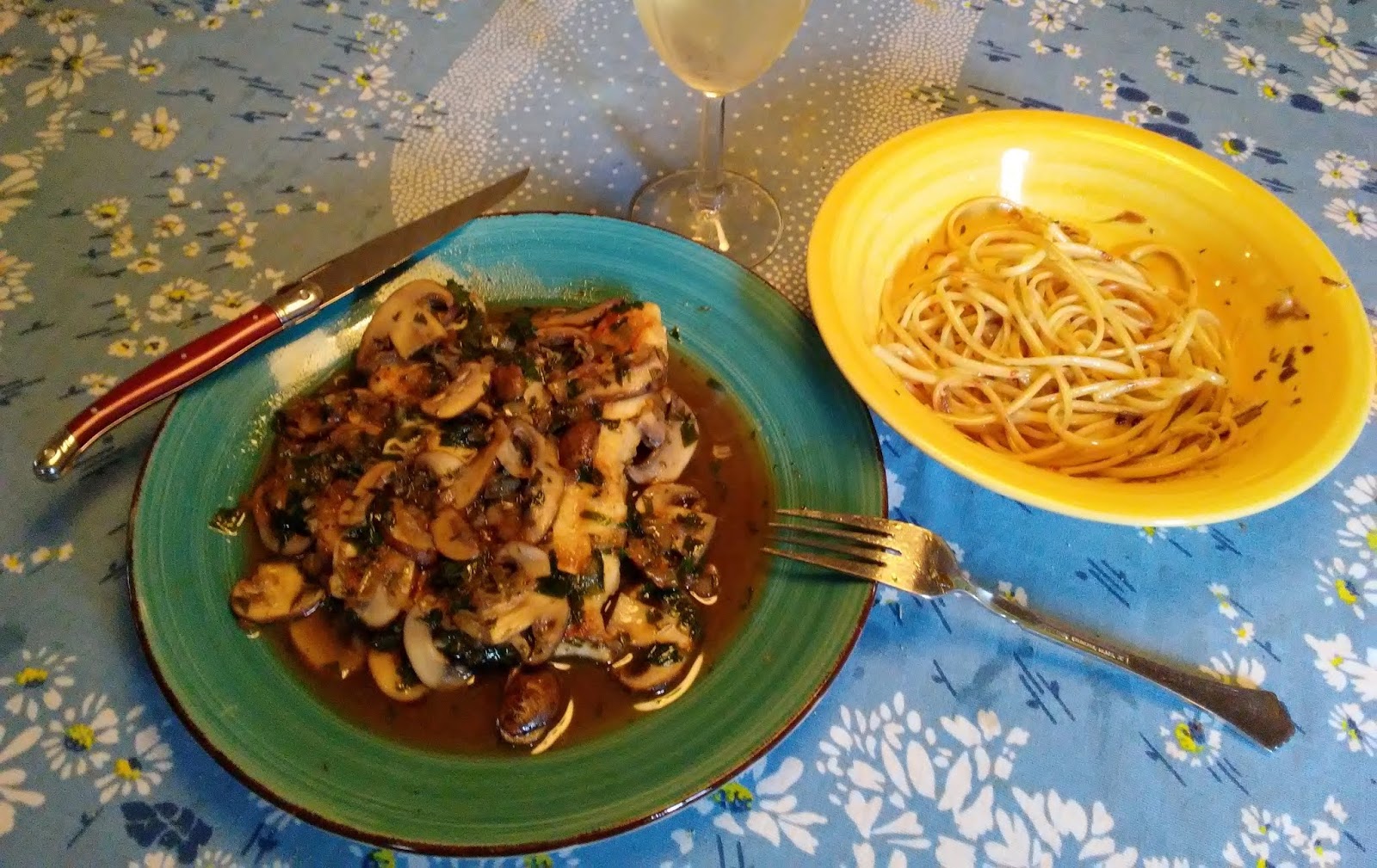
    Return chicken cutlets to pan, swirling to bathe them in the sauce and warm them through. Transfer to a warmed serving plate, spooning sauce and mushrooms all over chicken. Garnish with parsley and serve.


Thyme, parsley, shallot


with a side of pasta, or better yet, polenta


Thursday, November 3, 2016

Sicilian Pot Roast

Now that Fall is here, it's time for some hearty fare. So, here you go. While pot roast is not something you would find on a Sicilian table, it is our take on a pot roast that includes some wonderfully flavorful ingredients that are found in Sicilian/Southern Italian cuisine - fennel, tomatoes, garlic, olives, rosemary, red wine, orange zest. We even added a few fresh figs. Why not!

Ingredients - serves 4 or 2 with great leftovers

Chuck roast - 2 - 3 lb

1 can whole peeled San Marzano tomatoes - crush them with your hands

4 - 5 shallots chopped

1 fennel bulb cut into slices lengthwise, reserve the fronds

1/2 cup dry red wine - we used Valpolicella

3 sprigs of rosemary - leave whole

7 - 9 thin pieces of orange zest about 1/2 inch wide by 3 inches long, reserve the rest of the orange

1 cup pitted green Italian olives, NOT those Spanish ones in brine - we used Catelvetrano but you could use Kalamata olives in a pinch

6 fresh figs cut in half. Or you could use dried if fresh are not in season

1 head of garlic - roasted and the cloves separated and squeezed from their paper shells

1 tablespoon ground fennel seeds - we have an electric coffee bean grinder we use just for this kind of thing

Salt and pepper

Water

Directions 

Salt and pepper the roast and brown in a Dutch oven in two tablespoons of olive oil


Remove to a plate

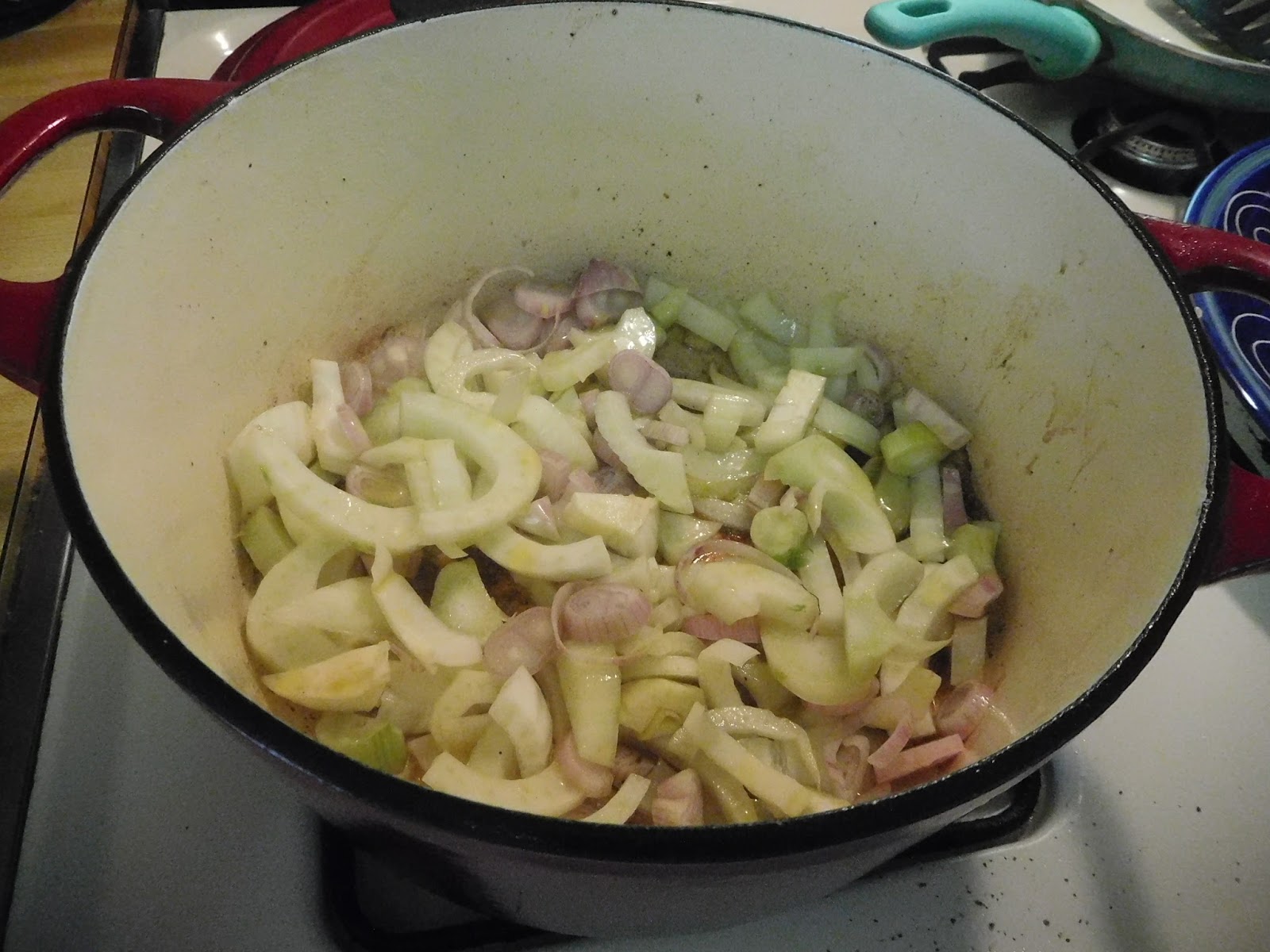
Season and saute the fennel and shallots in the roast juices and a little olive oil

Add the wine

Add  the meat back in

Orange zest slices

Add the orange zest, rosemary, tomatoes, a cup of water. Stir everything together 

Add the roasted garlic and and figs. Put in oven at 325. Roast covered for 4 hours, checking regularly and adding water if needed. 

When done, pull the meat apart, add the olives and ground fennel and stir through


Serve over mashed potatoes with an orange wedge and add the fennel fronds. Serve the same type of wine you used cooking the roast. Squeeze some orange juice over the meat.
  

Thursday, December 11, 2014

Osso Buco


This is one of those special wow factor dishes for special occasions. I’ve made it many years for Christmas Day dinner. The prep is the only time consuming part, the rest is pretty easy.

Osso buco is traditionally served with Risotto alla Milanese but you could also serve it with mashed potatoes or, my choice, over cheesy parmesan polenta.

You won’t usually find veal shanks in a supermarket. You may have to special order them but better to go to a good butcher shop. Ask the butcher to cut the shanks into 2 ½ inch thick slices from the middle part of the shank; the ends of the shank are mostly bone and do not have as much meat. If you don't want to use veal, substitute with pork shank and have it cut the same way - from the middle and 2 1/2 inched thick.  
The bone marrow is important in the preparation of Osso Buco because during the cooking process it melts down, producing the signature flavor of the dish.

It’s a good idea to tie each piece of veal with a piece of kitchen string around its girth to keep the shank from falling apart during cooking. The veal should braise until the meat could fall off the bone and can be eaten with a fork.

For the veal - serves 2
2 Veal shanks cut  2 ½  inches thick
Flour for dredging
Salt & Pepper
2 tablespoons butter
2 tablespoons olive oil
1 medium onion minced
½ cup celery minced
½ cup carrot minced
2 cloves of garlic minced
1 cup dry white wine (Pinot Grigio is good here)
1 ½ cup chicken stock
1 ½ cup crushed tomatoes in puree
2 sprigs worth of fresh rosemary
4 sprigs worth of fresh thyme

For the gremolata -
Make this at some point near the end of the cooking time and set aside
2 tablespoons lemon zest
¼ cup fresh flat leaf parsley minced
1 clove garlic minced

For the polenta -
4 cups water
1 teaspoon salt, plus extra for seasoning
2 cups yellow cornmeal or polenta
3/4 cup freshly grated Parmesan
1 cup whole milk, at room temperature
5 tablespoons unsalted butter, at room temperature, cut into 1/2-inch pieces
1/4 cup chopped fresh flat-leaf parsley
Freshly ground black pepper
Bring the water to a boil in a large, heavy pot. Add the salt. Gradually whisk in the cornmeal. Reduce the heat to low and cook, stirring often, until the mixture thickens and the cornmeal is tender, 15 to 20 minutes. Remove the pot from the heat. Add the cheese, milk, butter, and parsley. Stir until the butter and cheese have melted. Season with salt and pepper, to taste.

Directions - 
Heat oven to 350.

On medium heat, melt half the butter and half the olive oil in a Dutch oven.

Season the veal with salt and pepper then dredge in flour shaking off the excess.

Brown the veal in the Dutch oven. Then remove to a platter

Add the remaining butter and oil and saute the onion, celery, carrot and garlic for about 5 minutes.

Add the wine and deglaze scraping up any browned bits reduce for 2-3 minutes

Add the chicken stock, tomatoes, rosemary and thyme. Taste for salt and pepper.

Return the veal to the casserole. Make sure the sauce comes up to the top of the shanks add more wine or stock if needed.

Cover the pot and roast in oven for about 2 hours basting occasionally and adding water if necessary until meat is fork tender.

Towards the end of the cooking time make the polenta (or the mashed potatoes or the risotto Milanese). 

Remove veal from the casserole, turn off the oven and put the veal on a plate tented with foil back in the oven to keep warm.

With a immersion blender whiz the sauce in the casserole until smooth. Bring back to a simmer.

Spoon the polenta on to each plate and set a piece of osso buco on top

Ladle some of the sauce over the meat and sprinkle with the gremolata.

Serve with some crusty bread to mop up the sauce.

You probably won't have any left-overs but if you do, enjoy later. And if there is no meat but just sauce, it is wonderful over rice or noodles.

Monday, March 17, 2014

Corned Beef & Cabbage and Colcannon

OK, so it's a cold rainy St. Patrick's Day. What could be more appropriate to have for dinner (even in the middle of Lent...) than these hearty iconic Irish plate fillers. Look for Bangers and Mash another day. Left over corned beef is great for home-made reubens. That's right!
Here is our little 3 lb corned beef covered in a brown sugar, apricot jam and grainy mustard glaze surrounded by cabbage wedges and carrots, with a bottle of Harp poured in for good measure.
 
And right along side, colcannon - mashed red potatoes with braised kale rounded out the meal. Read more for the instructions.

We started with a typical corned beef (well kind of typical, with that odd knob of meat sticking up through the fat cap...) that you can find at any grocery store. Roasted it in a covered roasting pan for 4 hours at 300 degrees (rule of thumb - cook approx.1 hr per pound, but we let this go longer). To give it a little pop, we made a glaze of brown sugar, apricot preserves and grainy mustard, about a tablespoon of each stirred together and spread over the roast 2 hours in. Also added a bottle of Irish beer - Harp in this case for flavor and to keep the roast moist.

An hour before end of cooking time add a cabbage cut into wedges and a couple carrots cut into pieces on the bias. Put the lid back on.

    Done
  
For the colcannon -
Kale and red potatoes (and a Harp because... why not?)

Sautee 4 big handfuls of kale with 3 minced cloves of garlic and half a medium onion chopped.

Boil and mash 6 - 7 medium red potatoes (leave the skin on), add milk, butter, salt and pepper. Then stir in the kale.


 On the cutting board

On the plate